If you have any feedback on how we can make our new website better please do contact us and we would like to hear from you.
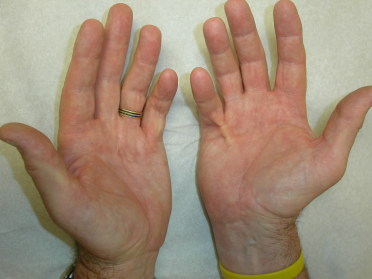
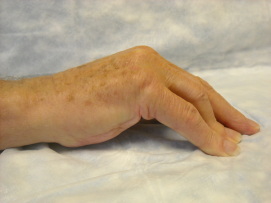
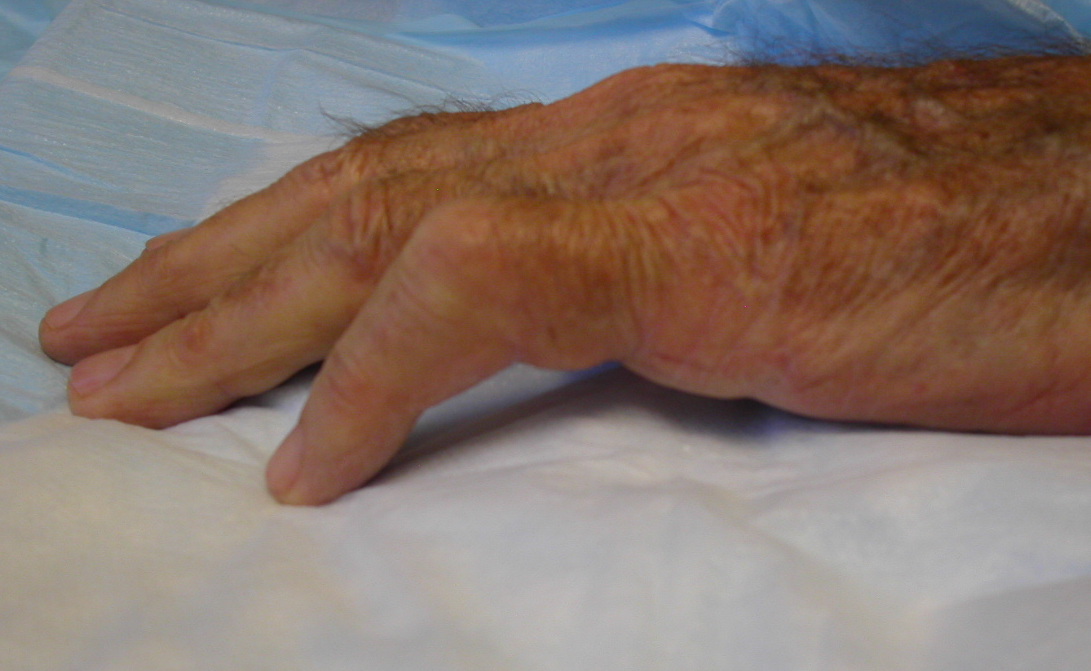
What is Dupuytren's disease? Dupuytren's is a growth that occurs in the palm and fingers of the hands. It occurs in both men and women, and is more common in caucasians of northern European descent. Over time there can be disabling contractures in the fingers and palm. There is no cure including changes in lifestyle, diet, medications, and surgery. It is considered hereditary, but there may be an environmental influences. Growths can also occur on the back of the fingers and on the sole of the foot.
How is it treated? Dr. Lewis specializes in both non-surgical and surgical treatment of Dupuytrens. If your growth is not causing disability, then simple monitoring is appropriate. A simple exam is the 'table top test' performed by placing your palm on a flat surface. If you are able to place your hand completely flat, then no treatment is necessary. Over time, contracture of your fingers can develop and treatment may be appropriate. We specialize in non-surgical management including both needle aponeurotomy and Xiaflex collagenase injections. Surgery is also an effective treatment for interested patients.